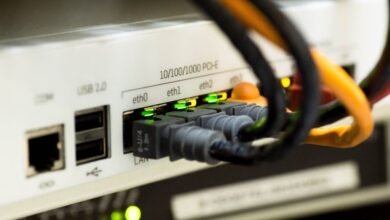
The 10.12.1 Private Network Settings Guide presents a disciplined framework for creating isolated, secure communication spaces. It emphasizes formal IP schemes, clear subnets, and adaptable addressing to ensure predictable routing and scalable growth. Access is controlled through layered defenses, including firewalls, VPNs, and least-privilege policies. Performance and troubleshooting are anchored in continuous monitoring and reproducible testing, with predefined rollbacks. The approach invites careful implementation, yet unresolved questions linger, inviting further scrutiny of how these elements integrate in practice.
What a Private Network Is and Why It Matters
A private network is a secure, isolated communication space that restricts access to authorized devices and users, separating it from public networks. The concept centers on controlled reach, verifiable identities, and encrypted channels. It clarifies privacy expectations and practical protections.
Public narratives often circulateNetworking myths, yet disciplined configurations prove resilience.
Private networks empower autonomous operation while lowering exposure to unauthorized access and data leaks.
Core Setup: IP Schemes, Subnets, and Addressing Plans
Core setup begins with a disciplined IP scheme, clear subnet boundaries, and a formal addressing plan that together enforce predictable routing, access control, and scalable growth.
This framework emphasizes Addressing schemes and Subnetting strategies as foundational tools, enabling disciplined network segmentation, consistent policy enforcement, and adaptable provisioning.
It preserves freedom by clarifying roles, limits, and growth paths without compromising security or control.
Securing Access: Firewalls, VPNs, and Access Controls
Securing access requires a disciplined approach to controlling entry points, authenticating users, and enforcing policies across the network perimeter and internal segments. Firewalls define allowed flows, while VPNs provision secure remote connectivity. Access controls enforce least privilege, and ongoing audits verify compliance.
Emphasize network isolation and zero trust to minimize risk, reduce attack surfaces, and preserve user freedom through transparent, enforceable safeguards.
Performance and Troubleshooting: Monitoring, Optimization, and Pitfalls
Performance and Troubleshooting focuses on systematic monitoring, targeted optimization, and the avoidance of common pitfalls that degrade network performance. This section analyzes latency budgeting, telemetry dashboards, throughput tuning, and jitter reduction, emphasizing disciplined data collection, reproducible testing, and minimal exposure to threat surfaces. It recommends precise thresholds, continuous verification, and predefined rollback plans to sustain secure, resilient private networks.
Frequently Asked Questions
How Often Should Private Network Documentation Be Updated?
The updating cadence should be quarterly, with formal reviews annually, ensuring documentation maintenance aligns to change management cycles. Updates occur whenever policy or topology changes justify it, prioritizing security, accuracy, and auditable traceability for a freedom-minded audience.
Which Vendors Offer Best-In-Class Private DNS Services?
Which vendors offer best-in-class private DNS services? A methodical assessment compares cloud DNS offerings, vendor comparison factors, privacy concerns, TCO upgrades, disaster recovery capabilities, and how private network documentation integrates with robust security and freedom-driven deployment strategies.
What Are Common Privacy Concerns With Private Networks?
A notable statistic shows 60% of enterprises report data exposure risk in private networks. Privacy concerns include potential user tracking, inconsistent network segmentation, and leakage of sensitive metadata; proper controls mitigate but do not erase these intrinsic vulnerabilities.
How to Estimate Total Cost of Ownership for Upgrades?
Cost estimation for upgrades requires defining scope, life-cycle, and mitigations; upgrade budgeting must include hardware, software, labor, and downtime costs. Consider privacy concerns and disaster recovery implications to ensure secure, freedom-preserving, auditable financial planning.
What Disaster Recovery Steps Are Essential for Private Networks?
Disaster recovery steps for private networks are essential and non-negotiable, though some may boast otherwise. The methodical approach prioritizes backups, redundant connectivity, tested failover plans, strict access controls, and continuous monitoring to ensure resilient, secure operations.
Conclusion
In quiet, orderly tones, the private network stands as a fortress bathed in pale firelight. Subnets form precise corridors; IP plans map predictable paths like quiet rivers beneath steel bridges. Access gates are guarded by tight policies, VPNs, and vigilant firewalls, while monitoring needles drift, recording every heartbeat. When plans falter, predefined rollbacks act as secure anchors. The result is a disciplined, auditable space—secure, resilient, and ever ready to sustain privacy and freedom within a tightly controlled, transparent framework.